How To Choose the Right Storage Unit Size: A Complete Guide
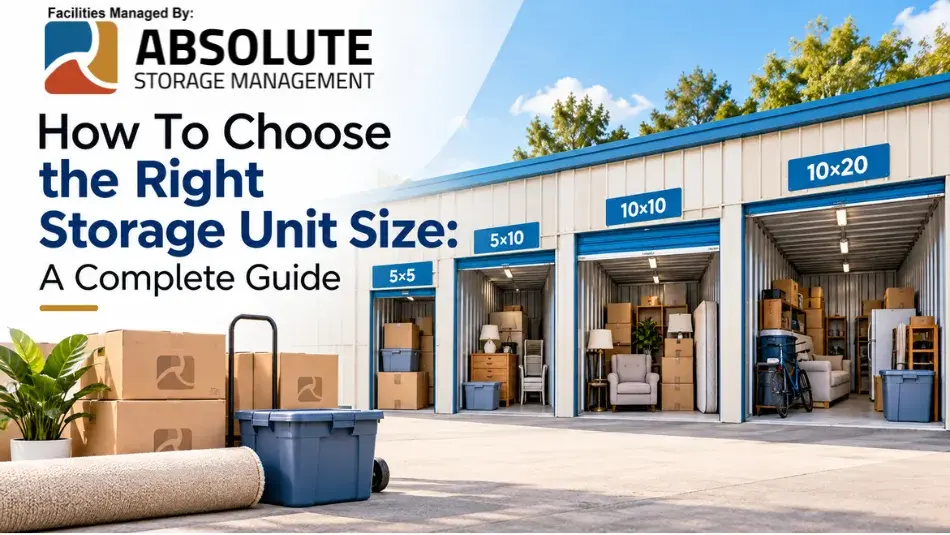
Rent a storage unit that’s too small, and move-in day turns into a puzzle you cannot solve. Rent one that’s too big, and you pay every month for empty floor space. Picking the right size doesn’t have to involve guesswork. With a quick inventory, a few measurements, and a clear idea of how you’ll use the space, you can choose a unit that fits your belongings and your budget.
This guide covers the most common storage unit sizes, what typically fits in each one, and the steps to follow before you reserve.
How Do I Choose the Right Storage Unit Size?
To choose the right storage unit size, list everything you plan to store, measure your largest furniture, and estimate your box count. Then match that inventory to a unit size: a 5×5 for a closet’s worth of items, a 10×10 for a one-bedroom apartment, and a 10×20 for a three-bedroom home. Add space for a walkway if you’ll visit often.
The sections below walk through each part of that process, starting with your inventory.
Start With a Quick Inventory
Before you compare unit sizes, list what you plan to store. Go room by room and write down the large items first, including beds, sofas, dressers, tables, appliances, and anything with wheels. Then estimate how many boxes you’ll need. Most people undercount boxes, so add 10 to 20 more to your number.
As you build your list, flag these items:
- Large or oddly shaped pieces like sectionals, bed frames, headboards, or kayaks
- Belongings you’ll want to reach often, such as seasonal gear, tools, or business inventory
- Items that react to heat and cold, including wooden furniture, electronics, photos, and important papers
That last group matters later, when you decide between a standard unit and a climate-controlled unit.
Common Storage Unit Sizes and What Fits
Storage unit sizes are listed by width and depth in feet. A 10×10 unit gives you 100 square feet of floor space. Because you can stack boxes and furniture, a unit’s real capacity is its volume, not just its footprint. Available sizes vary by location, so use the chart below as a starting point and check out our online size guide for details.
| Unit size | Square feet | Comparable to | What typically fits |
|---|---|---|---|
| 5×5 | 25 | A small closet | Boxes, seasonal clothing, small furniture, tools, craft supplies |
| 5×10 | 50 | A large closet | Holiday décor, lawn equipment, spare furniture, camping gear, a mattress set |
| 5×15 | 75 | A small bedroom | Business records, office equipment, exercise equipment, excess inventory |
| 10×10 | 100 | A medium storage shed | Furnishings from a one-bedroom apartment, appliances, patio furniture |
| 10×15 | 150 | A small one-car garage | A large one-bedroom apartment, a small trailer or ATV |
| 10×20 | 200 | A standard one-car garage | The contents of a three-bedroom home or an average-size vehicle |
| 10×25 | 250 | A long one-car garage | A four-bedroom home, a project vehicle and tools, a large trailer |
| 10×30 | 300 | A large garage | A five-bedroom home, small business equipment or inventory |
Small Units: 5×5 and 5×10
Small units work well when you need to clear out a closet, a spare room, or a garage corner. A 5×5 holds a stack of boxes and a few small pieces of furniture. A 5×10 fits the contents of a dorm room or a small studio, plus seasonal items like holiday decorations and camping gear.
Medium Units: 5×15 and 10×10
The 10×10 is one of the most popular sizes because it handles the furnishings of a one-bedroom apartment with room for boxes. A 5×15 offers a long, narrow layout that suits business records, office furniture, or fitness equipment you want to line up along one wall.
Large Units: 10×15 to 10×30
Large units are built for full-home moves, long-term downsizing, or small business storage. A 10×20 is about the size of a one-car garage and can hold a three-bedroom home or a standard vehicle. The 10×25 and 10×30 sizes fit four- and five-bedroom homes, trailers, and larger equipment.
5 Steps To Pick the Right Size
- Measure your largest items. Write down the length, width, and height of your biggest furniture. A long sectional or a king bed frame can decide the unit size on its own.
- Think in cubic feet, not just square feet. Stack sturdy boxes and flat furniture pieces vertically. A unit that looks small on paper can hold a lot when you pack it floor to ceiling.
- Plan how often you will visit. If you expect to pull items out regularly, leave a walkway down the center. That may mean going up one size.
- Match the unit type to your belongings. Wooden furniture, electronics, and paperwork do better in a climate-controlled unit, while tools and outdoor gear are fine in a drive-up unit. Read our guide on drive-up storage versus climate-controlled storage to compare.
- Ask the facility manager. Our team helps renters size units every day. Share your inventory list, and they can point you to the right fit.
Common Sizing Mistakes To Avoid
- Forgetting about furniture that doesn’t come apart. Measure recliners, armoires, and sleeper sofas before you commit.
- Skipping the walkway. A packed-solid unit makes it hard to reach anything in the back.
- Choosing on price alone. A smaller unit is cheaper until you need a second one.
- Using mismatched boxes. Boxes in two or three standard sizes stack tighter and more evenly than a mix of grocery boxes and bins.
- Ignoring future needs. If you plan to add items over the next few months, leave some open space now.
Signs You Should Size Up or Down
Go one size larger if your inventory includes several large appliances, a vehicle or bulky outdoor equipment, or if you want room to move around inside the unit. Go one size smaller if most of your items are boxes that stack neatly, you’re storing for a short time, and you do not need to reach things often. When you’re stuck between two sizes, the larger one usually saves you from a second trip later.
Find the Right Unit Size at Absolute Storage Management
Whether you’re moving, decluttering, or making room for a business, Absolute Storage Management has unit sizes and storage types to match. Find a storage location near you to compare available units and reserve online, or call your local facility for help choosing the right size.
Frequently Asked Questions When Choosing a Storage Unit
The most common storage unit sizes are 5×5, 5×10, 10×10, 10×15, 10×20, and 10×30. The 5×10 and 10×10 are popular choices for apartment moves, decluttering, and short-term storage. Available sizes vary by location.
A 10×10 unit fits the furnishings of most one-bedroom apartments, including a bed, dresser, sofa, table, and boxes. If your apartment is on the larger side or you have bulky furniture, a 10×15 gives you more room.
A 10×20 unit fits most standard cars. Larger vehicles, trucks, and boats may need a 10×25, a 10×30, or a parking space. Vehicle storage options vary by location, so check with your local facility.
If your inventory includes more large furniture than the unit can hold in a single layer, or if you would have to block the door to fit everything, the unit is too small. Leaving a walkway is a good way to test whether the size works.
A slightly larger unit is often the better choice if you plan to visit often or add items over time. If you’re storing a set number of boxes for a short period, the smaller size can save you money.